 Jason Rise Car Wash
Car Care Knowledge Base
Jason Rise Car Wash
Car Care Knowledge Base
How to Properly Wash a Ceramic-Coated Car (Complete Safe Wash Guide)
Ceramic coating protects your paint, but only if the car is washed correctly.
Improper washing doesn’t just reduce gloss — it slowly destroys ceramic performance.
This guide explains how a ceramic-coated car should actually be washed, why common habits cause problems, and how to avoid damaging an expensive coating — especially in wet climates like Vancouver.
This article is part of our Car Care Knowledge Base, where we explain ceramic coating maintenance, contamination, water damage, drying techniques, and long-term care.
Short Answer: How Should You Wash a Ceramic-Coated Car?
A ceramic-coated car should be washed by hand, using gentle technique, pH-neutral products, and proper drying.
The goal is not aggressive cleaning.
The goal is safe dirt removal without clogging, scratching, or chemically damaging the coating.
Key principles:
- Hand wash only
- pH-neutral, ceramic-safe shampoo
- Minimal friction
- Proper drying (never air-dry)
Each of these points matters — and we’ll explain why.
Why Ceramic-Coated Cars Must Be Washed Differently
Ceramic coating creates a hard, hydrophobic layer on top of the clear coat.
However, it is not scratch-proof, contamination-proof, or maintenance-free.
Improper washing leads to:
- Swirl marks and micro-marring
- Loss of hydrophobic behavior
- Dull or “dead” appearance
- Premature coating failure
Many people believe their ceramic coating has failed, when in reality it was washed incorrectly over time — a misconception that causes many coatings to be unnecessarily reapplied.
Step-by-Step: How to Wash a Ceramic-Coated Car Properly
1. Thorough Pre-Rinse (Before Touching the Paint)
Always rinse the car thoroughly before washing.
This removes:
- Loose dirt
- Sand and grit
- Road debris
Skipping this step dramatically increases the risk of scratching, even on ceramic-coated paint.
2. Use a pH-Neutral, Ceramic-Safe Shampoo
Avoid:
- Degreasers
- Acidic cleaners
- “Heavy-duty” or strip-wash soaps
These products are designed to remove protection — which is the opposite of what you want on ceramic coating.
A proper shampoo cleans without stripping or drying out the coating.
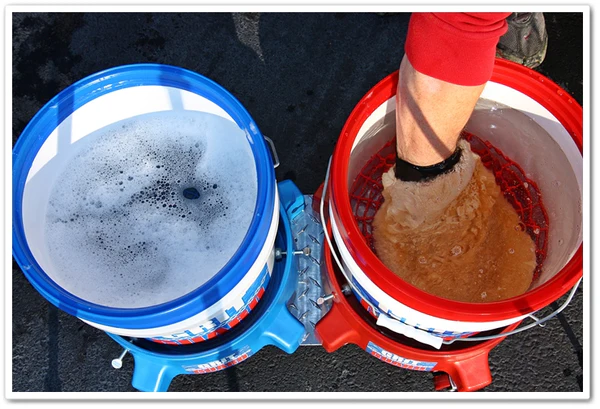
3. Two-Bucket Hand Wash Method
This method is essential for ceramic-coated cars.
- One bucket: clean shampoo solution
- One bucket: rinse water
- Soft microfiber wash mitt only
Wash from top to bottom, leaving lower panels and rear bumper for last.
This reduces friction and prevents dragging heavy contamination across the paint.
4. Gentle Final Rinse – Let the Coating Work
After washing, rinse the car gently.
On a healthy ceramic coating you should notice:
- Strong water beading
- Fast water sheeting
If water behavior looks inconsistent, this may indicate surface contamination rather than coating failure.
If you notice uneven beading between panels, this is often a sign of contamination rather than a failed coating.
Read more: Signs Your Ceramic Coating Is Contaminated – Not Dead
5. Proper Drying (Never Skip This Step)
This is where many ceramic coatings are damaged.
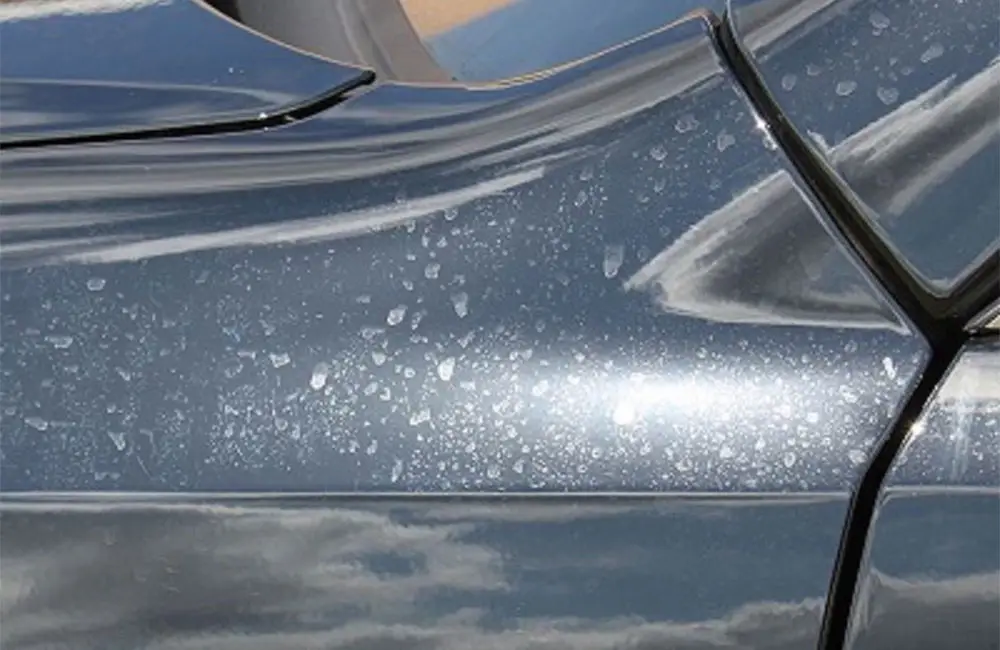
Never allow a ceramic-coated car to air-dry.
When water dries naturally, it leaves behind:
- Minerals
- Pollutants
- Deposits that bond to the coating
Over time, this kills hydrophobic performance faster than light scratches
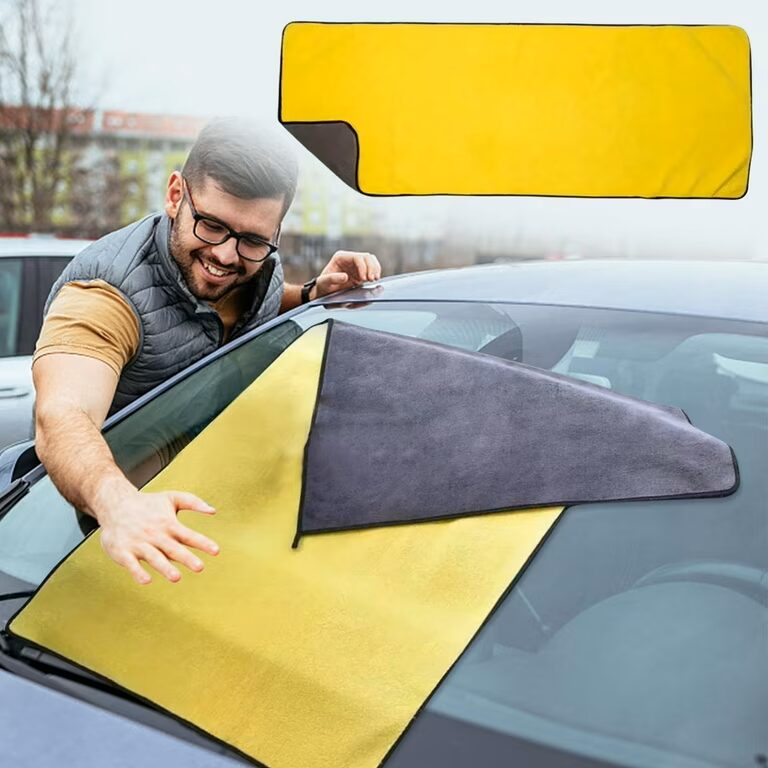
Always dry using:
- Clean microfiber drying towels
- Light pressure or blotting
- Optional ceramic-safe drying aids
What Products Are Safe — And What Are Not
Safe for Ceramic Coatings
- pH-neutral shampoos
- Clean microfiber wash mitts
- Microfiber drying towels
- Ceramic-safe drying aids
Not Safe (Long-Term)
- Automatic brush car washes
- Harsh chemicals
- Dish soap or degreasers
- Dirty sponges or old towels
Automatic washes may seem convenient, but they are one of the fastest ways to degrade ceramic coatings
Common Washing Mistakes That Damage Ceramic Coatings
Avoid these habits:
- ❌ Automatic brush car washes
- ❌ Washing in direct sunlight
- ❌ Letting the car air-dry
- ❌ Applying pressure to “wash faster”
- ❌ Washing only when the car looks extremely dirty
Ceramic coatings perform best with consistent, gentle maintenance, not aggressive cleaning.
These habits are the most common reason owners believe their ceramic coating has failed — even when it hasn’t.
Why This Matters Even More in Rainy Climates
In rainy climates:
- Water contains minerals and pollutants
- Cars stay wet longer
- Contamination builds up faster
This makes proper washing and drying even more important, not less.
Without correct maintenance, ceramic coatings in wet environments often appear to “fail early” — when in reality, they are simply contaminated and neglected
Does proper washing prevent ceramic coating failure?
Yes. Most ceramic coating “failures” are caused by improper washing and drying, not by the coating wearing out.
Final Verdict
Proper washing is the foundation of ceramic coating longevity.
Correct technique:
- Preserves hydrophobic behavior
- Prevents premature failure
- Maintains gloss and slickness
- Protects your investment
Ceramic coating works extremely well — when it’s washed the right way, every time.