 Jason Rise Car Wash
Car Care Knowledge Base
Jason Rise Car Wash
Car Care Knowledge Base
Signs Your Ceramic Coating Is Contaminated – Not Dead
Many car owners assume their ceramic coating has failed the moment water stops beading perfectly.
In reality, this is one of the most common – and expensive – misconceptions in car care.
In most cases, ceramic coating doesn’t fail.
It becomes contaminated.
Understanding the difference between a dead coating and a clogged one can save you money, preserve your paint, and prevent unnecessary reapplication.
This article is part of our Car Care Knowledge Base, where we explain how ceramic coatings behave in real-world conditions and how to maintain them correctly.
Short Answer: Is My Ceramic Coating Really Dead?
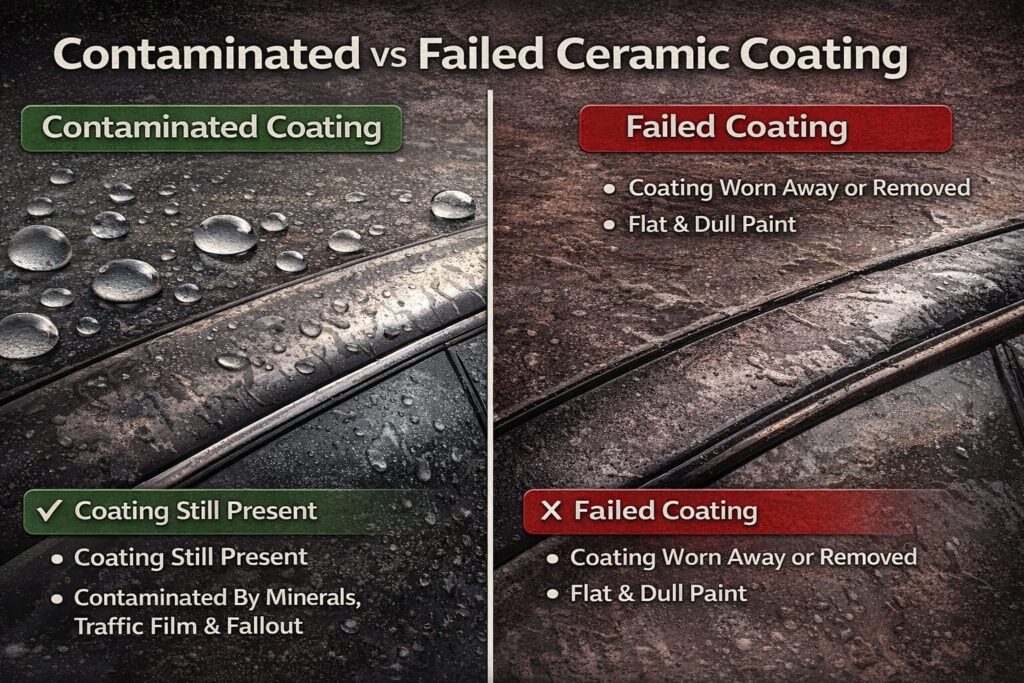
Most of the time — no.
If your ceramic coating:
- beads water inconsistently
- looks dull or muted
- feels rough after washing
…it is usually contaminated, not gone.
True ceramic coating failure is far less common than people think.
Dirty vs Dead: The Key Difference
A dead ceramic coating
- is physically worn away or chemically destroyed
- does not recover at all
- shows no improvement after proper washing
A contaminated ceramic coating
- is still bonded to the paint
- is covered by minerals, traffic film, and fallout
- can often regain performance after proper care
Most “failures” fall into the second category.
This misconception is explained in detail here:
👉 Why Ceramic Coating Fails – And Why It Usually Doesn’t Actually Fail
Key Signs Your Ceramic Coating Is Contaminated (Not Gone)
1. Water Beads in Some Areas, But Not Others
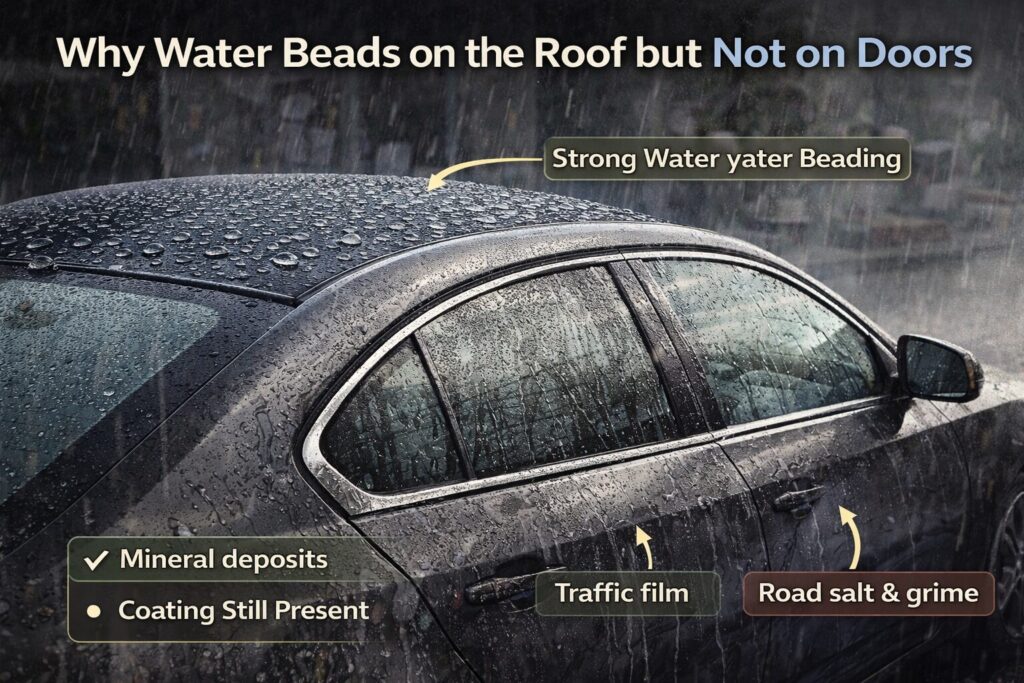
This is one of the strongest indicators.
If:
- the roof and hood still bead
- but doors and lower panels do not
…the coating is unevenly contaminated, not removed.
Lower panels collect more:
- road film
- salt
- minerals
The coating underneath is usually still intact.
2. The Paint Feels Rough Even After Washing
If the car looks clean but feels gritty, this is not coating failure.
That texture usually comes from:
- mineral deposits
- embedded traffic film
- industrial fallout
Ceramic coating does not cause roughness — contamination does.
3. Hydrophobic Behavior Improves After Proper Washing
If water behavior:
- improves slightly after a careful hand wash
- improves more after deeper cleaning
…the coating is still working.
A truly failed ceramic coating does not come back at all.
This is why correct washing technique matters so much:
👉 How to Properly Wash a Ceramic-Coated Car (Complete Safe Wash Guide)
4. The Car Still Dries Faster Than Uncoated Paint
Even contaminated ceramic coatings often:
- sheet water faster
- dry quicker than bare clear coat
This hidden behavior is a strong sign the coating is still present — just clogged.
5. Gloss Is Muted, Not Completely Gone
Contaminated coatings usually look:
- less sharp
- less reflective
But depth and clarity are still visible underneath.
Dead coatings typically lose both gloss and slickness completely.
Simple Tests You Can Do Without Tools
You don’t need special equipment to diagnose ceramic contamination.
Try this:
- rinse the car and observe water behavior
- compare upper vs lower panels
- wash properly and recheck beading
If performance varies — contamination is the likely cause.
What Usually Restores Ceramic Coating Performance
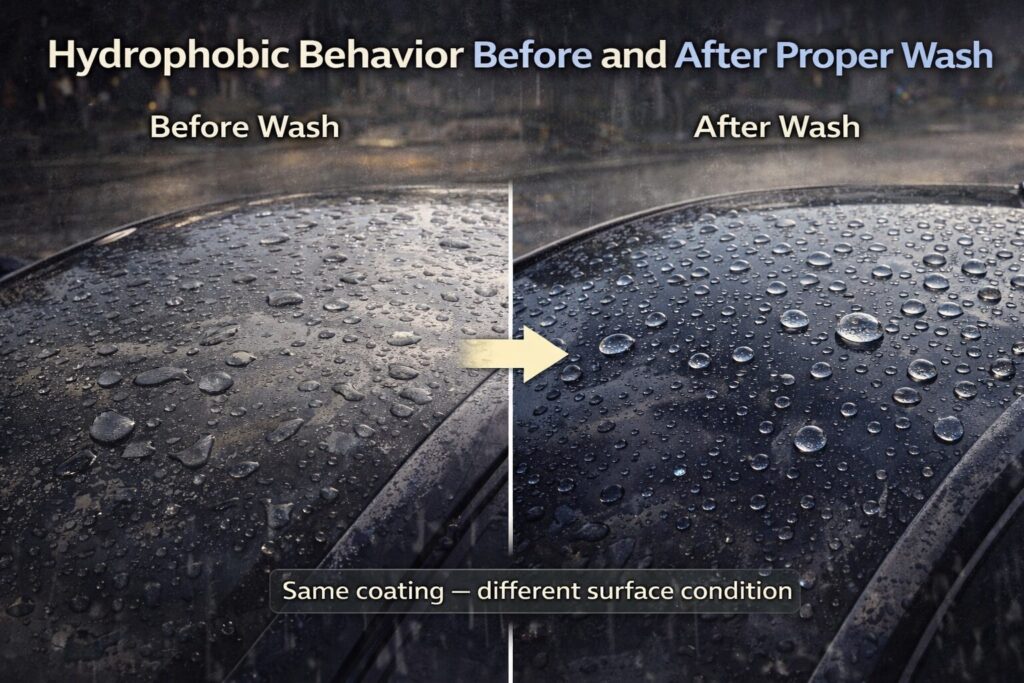
In many cases, ceramic performance returns after:
- correct hand washing
- removal of mineral and traffic film
- light decontamination
- ceramic-safe toppers or reload products
This restores:
- water beading
- slickness
- gloss
No reapplication required.
When washing alone no longer helps, deeper cleaning becomes necessary — covered in an upcoming article:
What Is a Decontamination Wash – And Why Ceramic Coatings Need It.
Why This Happens So Often in Vancouver
Vancouver conditions accelerate contamination:
- constant rain leaves minerals behind
- cars stay wet longer
- winter introduces salt and grit
Here, ceramic coatings don’t fail faster —
they get contaminated faster if not maintained properly.
Final Verdict
Loss of water beading does not automatically mean ceramic coating failure.
In most cases:
- the coating is still there
- it’s simply contaminated
- proper care brings it back
Understanding this difference:
- prevents unnecessary re-coating
- saves money
- protects your investment